


What is a Trace Fossil?
Trace Fossils are evidence of organisms’ activity and fossilize the same way as other types of fossils. Common examples include footprints/tracks, burrows, coprolites (animal excrement), and more. Trace fossils form by the same processes that preserve remains of the organism itself. Trace fossils provide valuable information about ancient ecosystems and ancient climates.
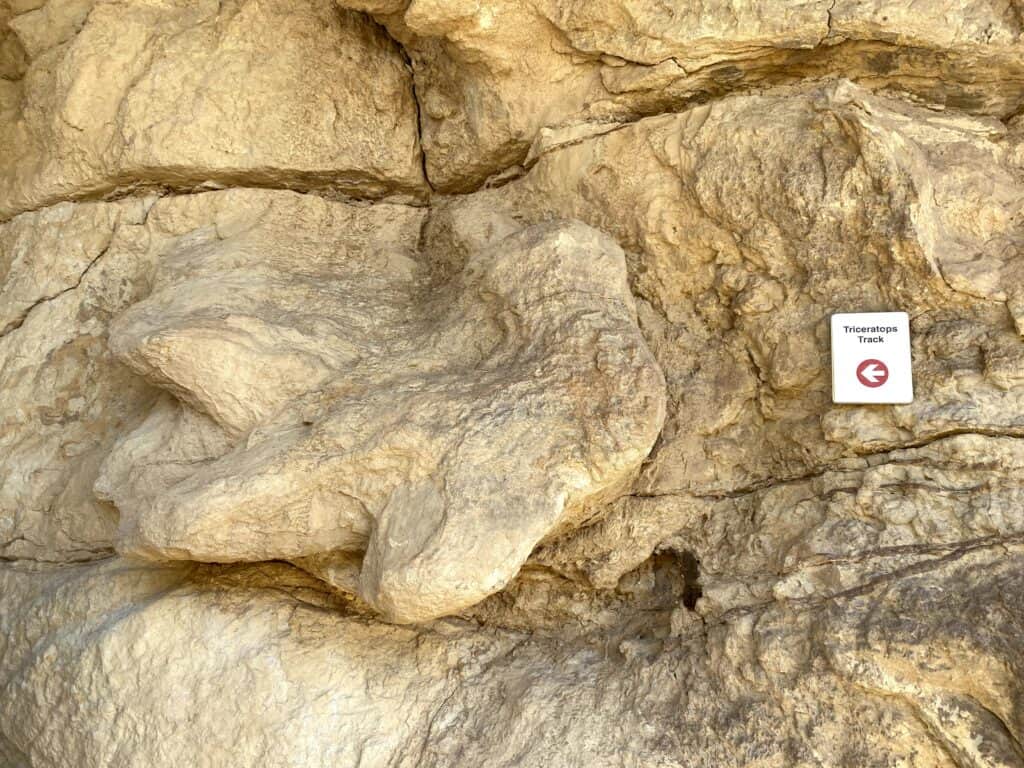
Because trace fossils form in the same environments where organisms once lived, they offer valuable evidence about the conditions of those ancient settings. These environmental clues help geologists identify where rock formations from specific time periods may exist and whether those settings are associated with potential hydrocarbon-bearing strata.
For example, certain trace fossils can indicate whether a rock unit was deposited in shallow‑ or deep‑marine environments—settings that may host hydrocarbon resources. The types of traces reflect the organisms that inhabited those environments, allowing scientists to infer key ecological factors such as oxygen availability. In marine settings, low-oxygen conditions are particularly significant: they can signal limited decay of organic matter, increasing the likelihood that hydrocarbons accumulated and were preserved within the subsurface rock.
Image Credits
- Triceratops track – Triceratops Trail in Golden, CO: Sabrina Ewald