


Igneous rock can be thought of as the mother of all rocks. Earth was molten rock as it formed and over time, cooled to form igneous rock. Over millions of years, this igneous rock was put under heat and pressure to one day become metamorphic rock and likewise, was subject to surface processes of weathering, erosion, deposition, and lithification to become sedimentary rock.
Types of Igneous Rocks
Igneous rock forms in two environments – in the subsurface (underground) or at Earth’s surface. When igneous rock forms in the subsurface, it is known as plutonic (intrusive) igneous rock. Plutonic igneous rock forms when magma slowly cools over millions of years. This slow cooling process is the reason you see large mineral grains in plutonic igneous rock (think granite).
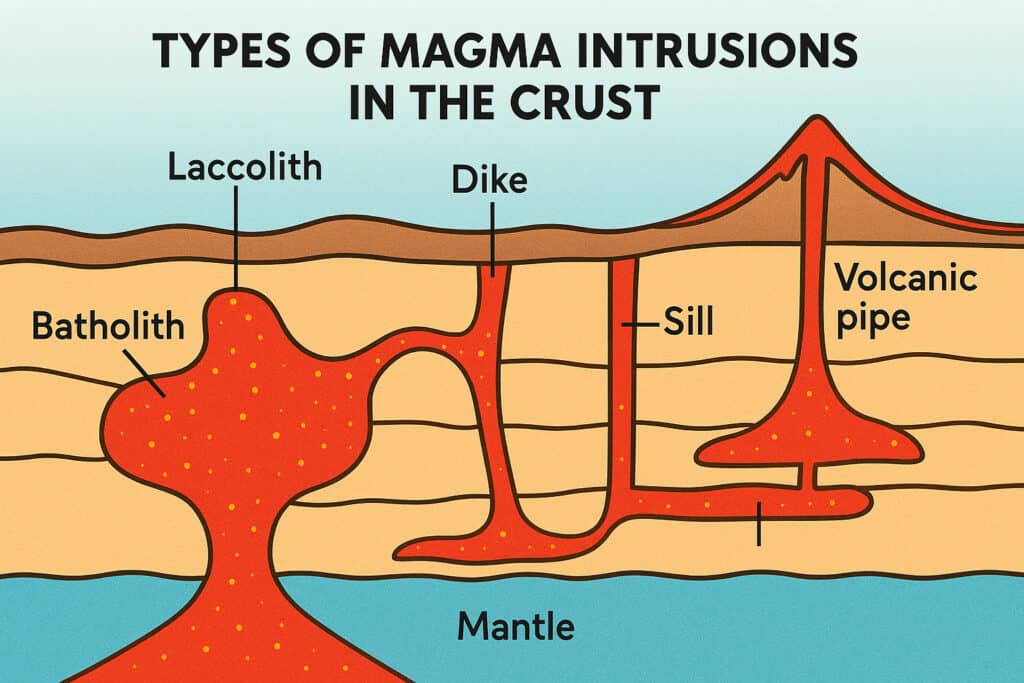
In central Texas, a batholith was exposed during a regional uplift event. A batholith is a huge body of igneous rock that formed underground and was later revealed by uplift and erosion. This massive igneous intrusion, known as Enchanted Rock, consists of Precambrian granite that formed approximately 1 billion years ago. Learn more about this Texas treasure here on the Bureau of Economic Geology’s website.

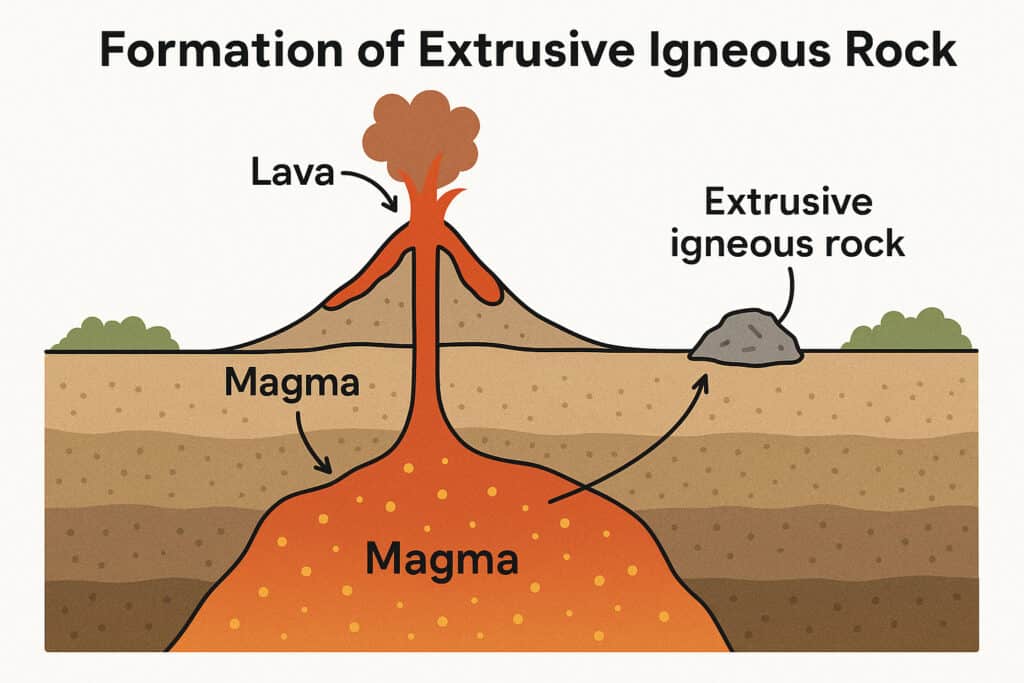
Igneous rock that forms at Earth’s surface is known as volcanic (extrusive) igneous rock. Volcanic igneous rock forms as a result of volcanic activity. This can be volcanic eruptions, lava fields associated with fissure eruptions, or lava cooling at mid-ocean ridges. This type of igneous rock cools much more quickly, and therefore, the rock does not tend to have large visible mineral grains.
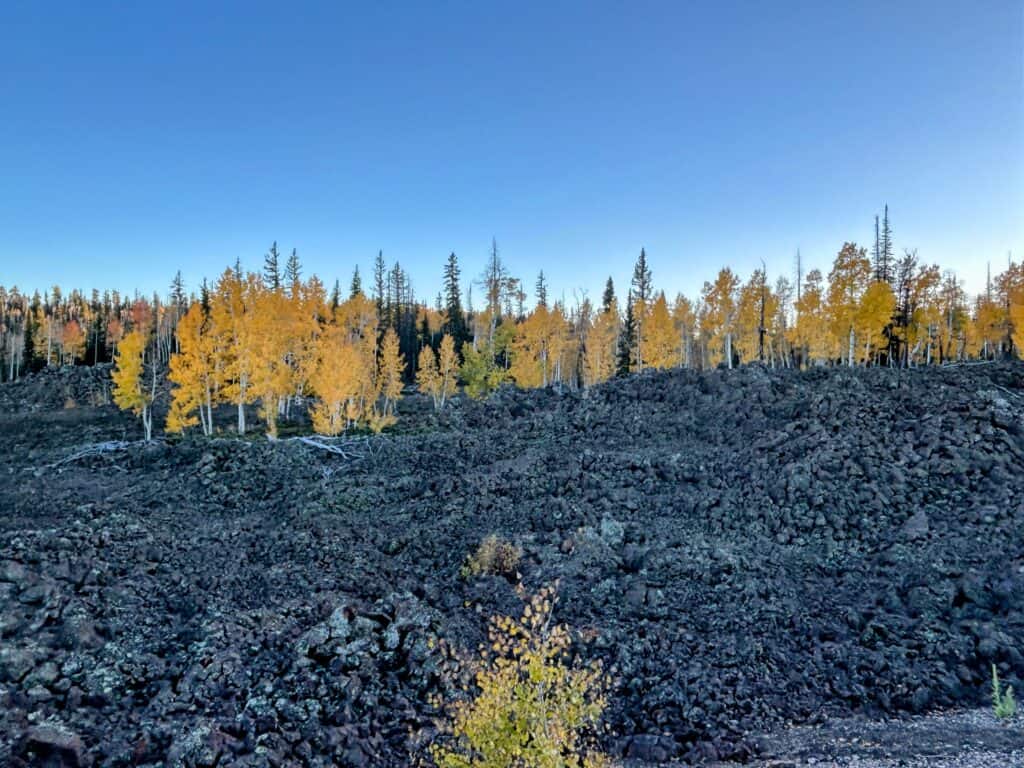
The photo below shows a lava field in southern Utah, located near Cedar Breaks National Monument and just north of Zion National Park. This field lies within the Markagunt Plateau, where volcanic activity began approximately 5 million years ago. The most recent eruption occurred around 1,000 years ago. The lava flow is primarily composed of basalt. For more information, visit the USGS website.
Igneous Rock Resources
Igneous rocks supply numerous valuable resources that support everyday life. While hydrocarbons—such as oil, natural gas, and coal—do not originate in igneous rocks, many important materials are closely linked to igneous processes.
Valuable metals and minerals are commonly associated with the formation of igneous rocks and can be extracted through processing. Rocks that contain high concentrations of economically useful metals are known as ores, and many of these occur within igneous formations. In addition, gemstones and industrial minerals often form under similar conditions, which means they are also frequently found in igneous rocks.
Here are specific examples:
Metal Ores
•Iron (used to make steel)
•Copper (used in electrical wiring)
•Gold and silver (used in jewelry and electronics)
•Nickel and chromium (used in stainless steel)
Everyday materials
•Quartz (used to make glass and electronics)
•Feldspar (used in ceramics and glass)
•Mica (used in electronics and insulation)
Gemstones
•Diamond (often brought up by volcanic rocks)
•Opal (sometimes associated with volcanic environments)
•Topaz, Tourmaline
Building and Construction Materials
•Granite (used for buildings and countertops)
•Basalt (used in roads and construction)
•Pumice (used in cleaning products and lightweight concrete)
•Obsidian (used decoratively and historically for tools)
Volcanic Materials
•Sulfur (used in medicine, fertilizer, and other chemicals)
These resources form because igneous processes concentrate elements through crystallization, magma differentiation, and hydrothermal fluids, making them economically valuable.
Image Credits
- Types-of-Magma-Intrusions (AI): AI
- enchanted-rock: Photo Credit: Sabrina Ewald
- Formation-of-Extrusive-Igneous-Rocks: AI
- Lava-Flow (1): Photo Credit: Sabrina Ewald