


What is a rock?
Rocks are a solid substance, composed of minerals and/or pieces of other rocks. For billions of years, rocks have been constantly changing based on natural internal and external processes. The rock cycle provides an explanation for how a specific type of rock can be changed into a new type of rock (ex. an igneous rock forms into a sedimentary rock) or another version of the same type (ex. a sedimentary rock forms into a new/different type of sedimentary).
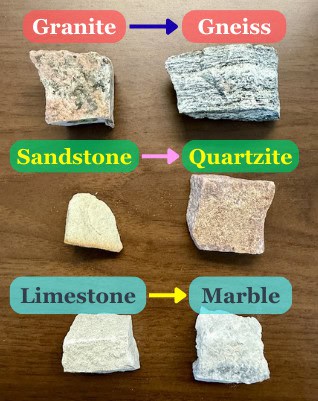
Figure 1 shows different types of rocks and what they can turn into through certain geological processes. Gneiss, quartzite, and marble are metamorphic rocks, which form deep inside the Earth when heat and pressure change existing rocks. Granite is an igneous rock that forms when magma cools slowly underground. Sandstone and limestone are sedimentary rocks, created at Earth’s surface when layers of sediments and minerals are pressed together and cemented over time.
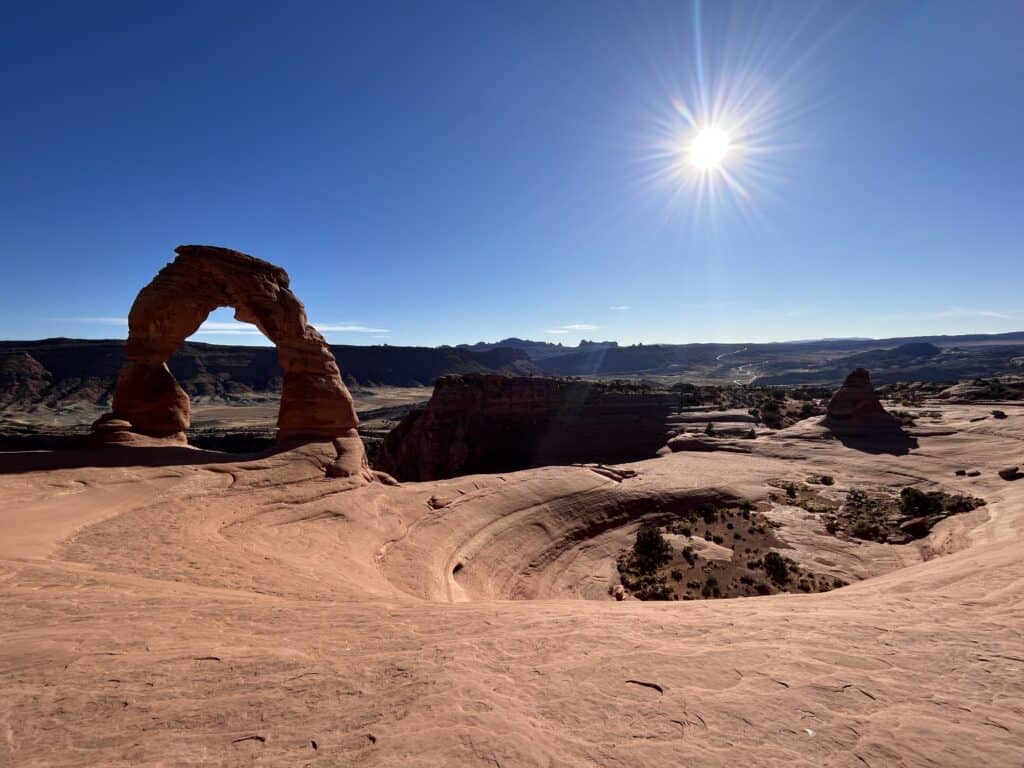
What is a mineral?
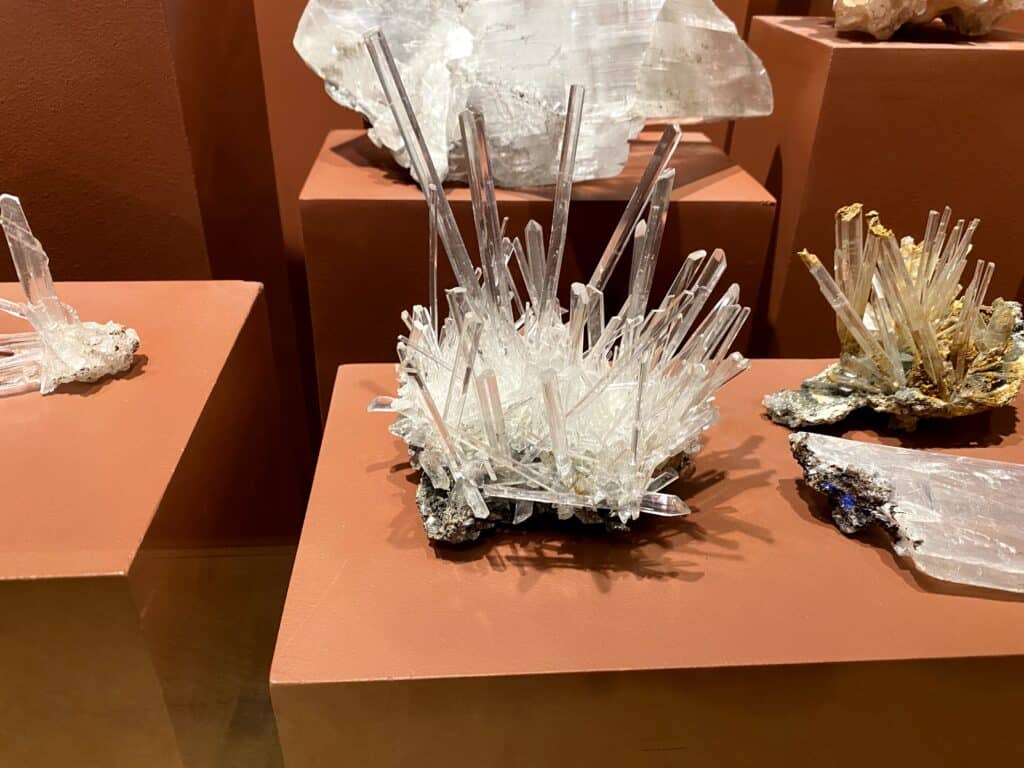
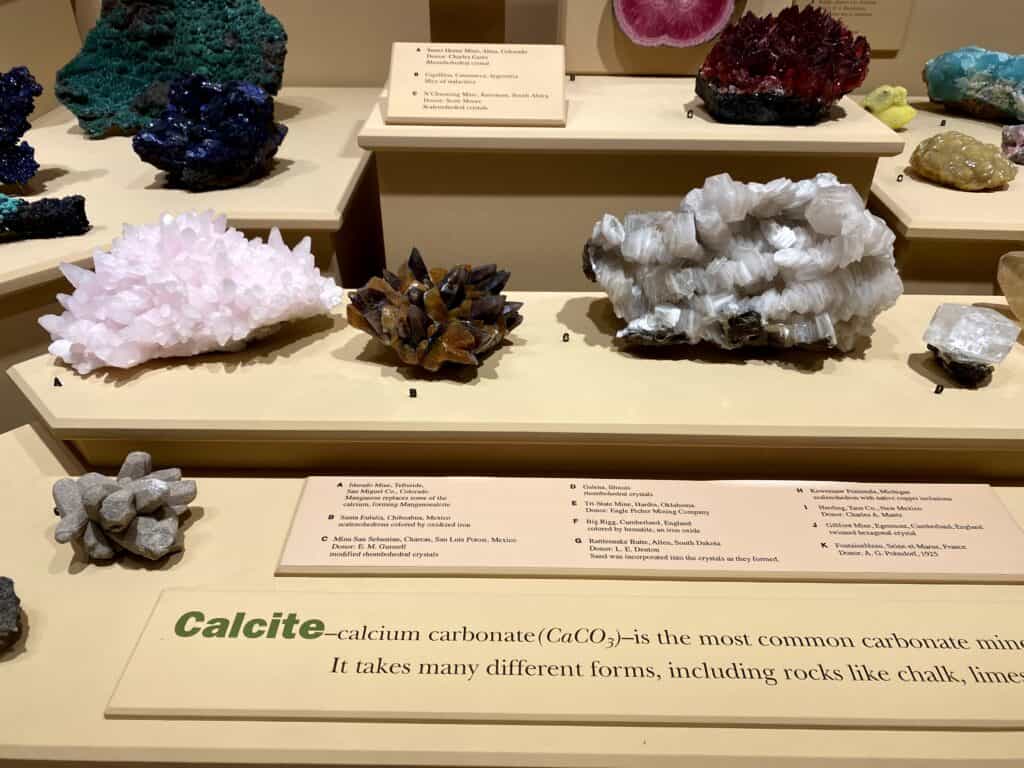
Minerals are the fundamental building blocks of rocks. They are naturally occurring, inorganic solids with a defined chemical composition and a specific crystalline structure. Minerals can consist of a single element, such as gold, silver, or platinum, or they can be composed of multiple elements, like quartz, which is made of silicon and oxygen. The types and arrangements of minerals determine the physical and chemical properties of a rock. When minerals are exposed to processes such as heat, pressure, melting, cooling, and weathering, their structure and composition can change, leading to the formation of new types of rocks.
Why is it important to study rock and mineral properties?
Scientists and engineers need to understand the physical and chemical properties of rocks and minerals to extract oil and natural gas trapped inside tiny spaces in rocks. When rocks form, the way minerals line up depends on their shape. For example, clay minerals like kaolinite are flat and sheet-like, while quartz grains are more rounded or blocky. These differences affect how the minerals pack together, which changes how much empty space (porosity) the rock has and how easily fluids can flow through it (permeability). As shown in Figure 2, clay minerals and quartz align differently, leading to differences in how fluids move through the rock.
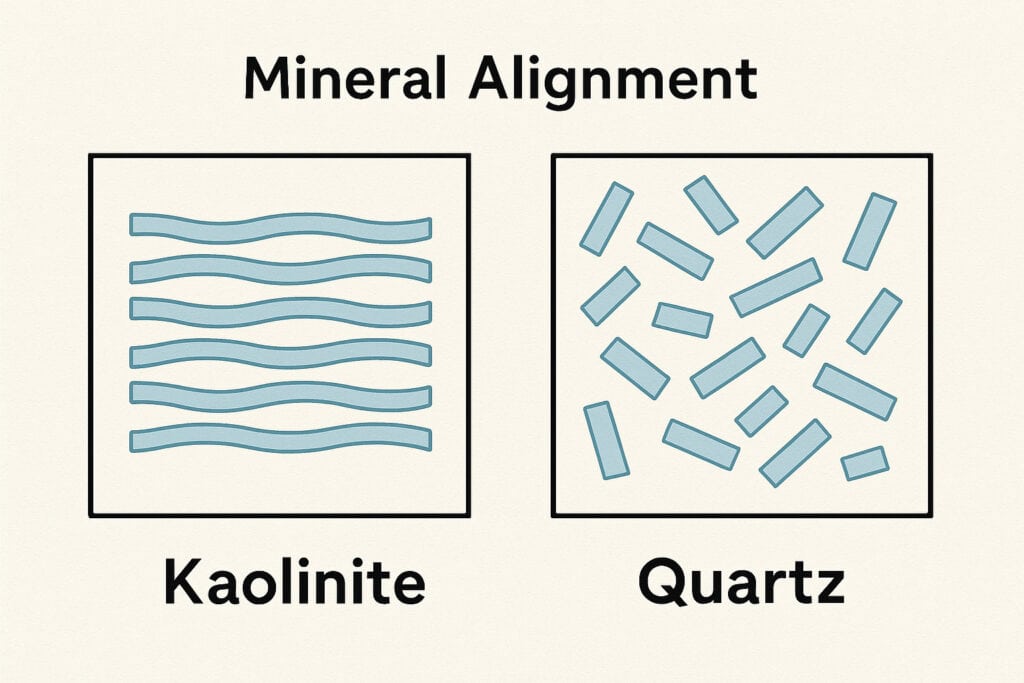
Deep underground, rocks have tiny spaces called pores that can hold fluids like oil, gas, or water. The surfaces of these rocks can behave differently with water—some attract it (hydrophilic), while others repel it (hydrophobic). This matters because it changes how oil and gas move through the rock. Think of it like water on different surfaces: on glass, it spreads out, but on wax paper, it beads up. In the same way, the way rock surfaces interact with fluids affects how easily oil can flow, which is important when drilling for energy resources.
Learning about different types of rocks and how they form is important for finding and producing oil and gas underground. Scientists mainly look for sedimentary rocks because these are the most likely to contain hydrocarbons. To do this, they need to be able to tell different rock types apart. They can identify rocks by studying how they were formed and by looking at their physical and chemical characteristics. For example, in places like Texas, geoscientists study layers of sedimentary rock such as sandstone and limestone to locate oil reservoirs deep underground. By understanding these rock layers, they can decide where to drill wells. In the next sections, you will learn about each type of rock and the environments where they form.
Image Credits
- IMG_3651: Sabrina Ewald
- quartz: Photo Credit: Sabrina Ewald
- calcite: Photo Credit: Sabrina Ewald
- Mineral-Alignment (AI): AI