


Rocks are a solid substance, composed of minerals and/or pieces of other rocks. For billions of years, rocks have been constantly changing based on natural internal and external processes. The rock cycle provides an explanation for how a specific type of rock can be changed into a new type of rock (ex. an igneous rock forms into a sedimentary rock) or another version of the same type (ex. a sedimentary rock forms into a new/different type of sedimentary).
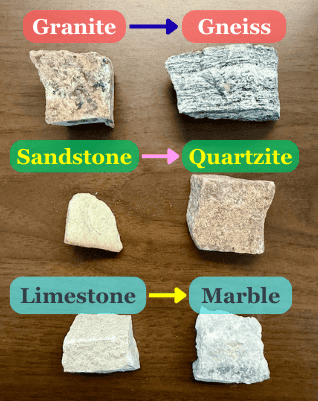
Figure 1 shows different types of rocks and what they can turn into through certain geological processes. Gneiss, quartzite, and marble are metamorphic rocks, which form deep inside the Earth when heat and pressure change existing rocks. Granite is an igneous rock that forms when magma cools slowly underground. Sandstone and limestone are sedimentary rocks, created at Earth’s surface when layers of sediments and minerals are pressed together and cemented over time.
Minerals are the building block of rocks. Minerals are naturally occurring, inorganic solids that have a specific crystalline structure. Minerals can be singular elements, such as gold, silver, or platinum or composed of multiple elements like quartz (made of silicon and oxygen). Minerals provide the physical and chemical properties of rocks and when minerals are subject to heat, pressure, melting, cooling, and weathering, their physical and chemical structure are altered as the new rock forms.
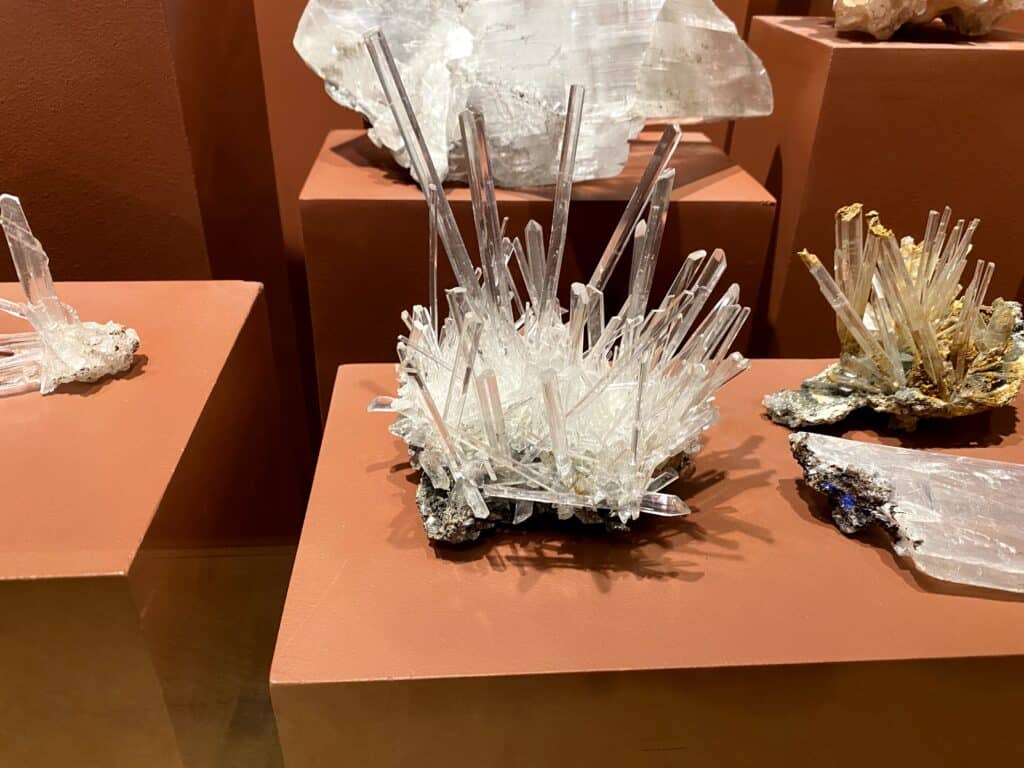
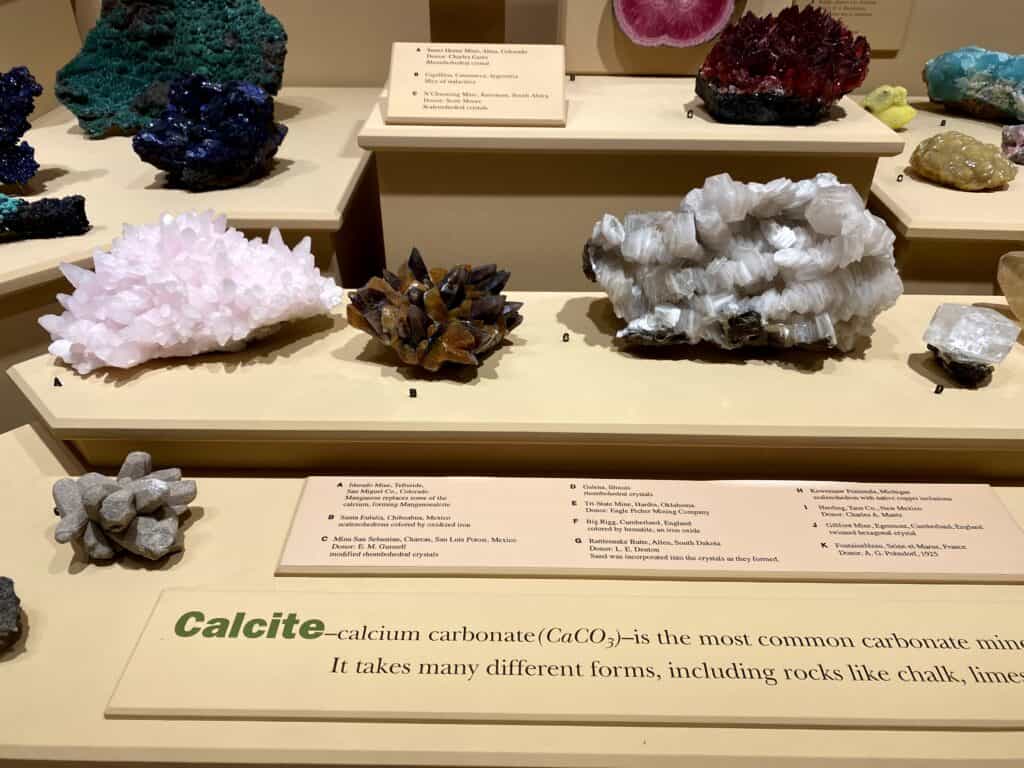
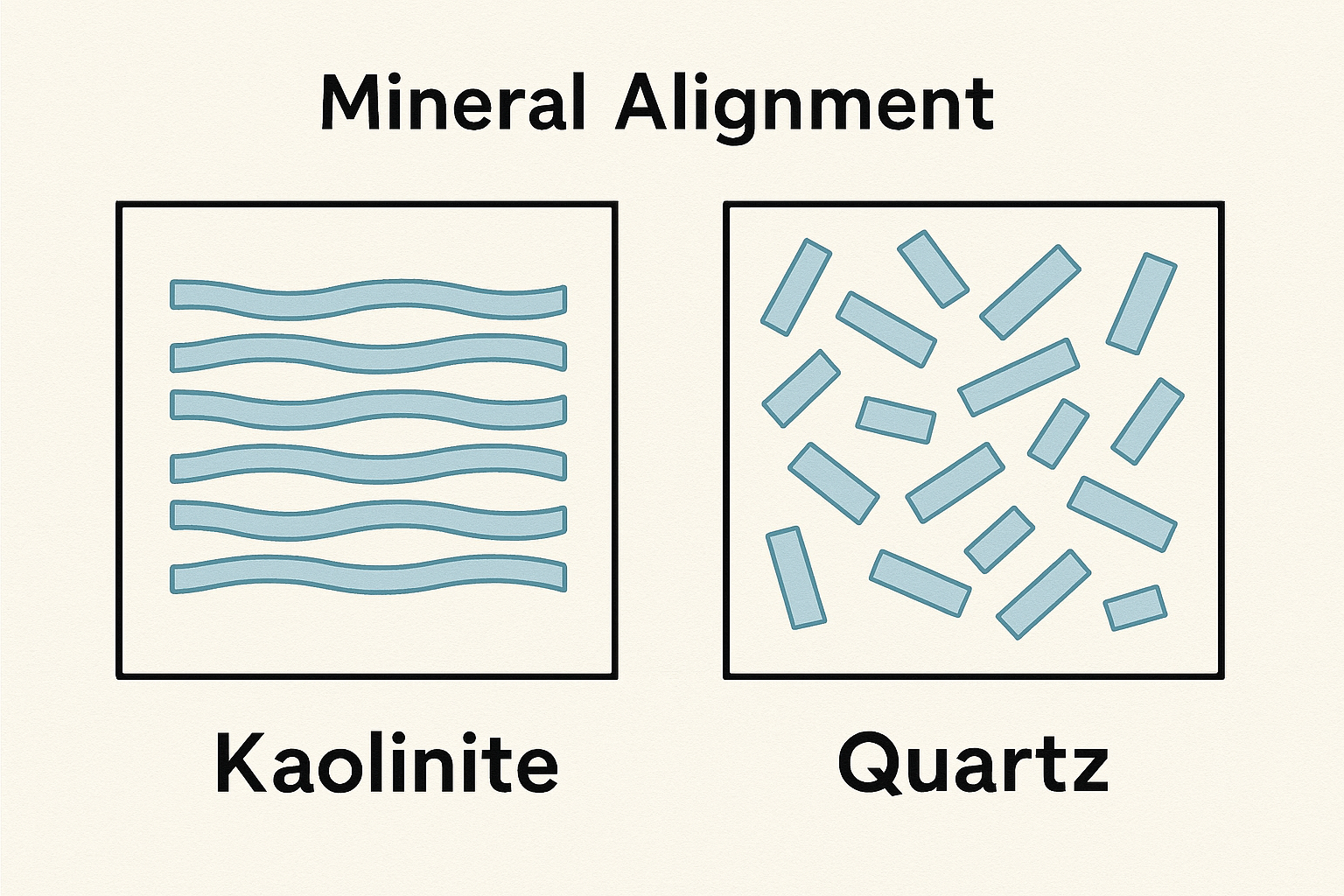
Scientists and engineers must understand the physical and chemical properties of rocks and minerals in order to successfully obtain hydrocarbons stored in the pore space of rocks. As rocks form, mineral alignment varies based on the type of mineral (e.g. clay minerals like kaolinite are flat, whereas quartz particles are hexagonal and can rounded). The alignment of the minerals influences the porosity and permeability of the rock. In Figure 2 below, you can see how mineral alignment differs between clay minerals (Kaolinite) and silica minerals (quartz).
Deep underground, rocks have tiny spaces called pores that can hold fluids like oil, gas, or water. The surfaces of these rocks can behave differently with water—some attract it (hydrophilic), while others repel it (hydrophobic). This matters because it changes how oil and gas move through the rock. Think of it like water on different surfaces: on glass, it spreads out, but on wax paper, it beads up. In the same way, the way rock surfaces interact with fluids affects how easily oil can flow, which is important when drilling for energy resources.

Image Credits
- Rock-Types: Sabrina Ewald
- quartz: Photo Credit: Sabrina Ewald
- calcite: Photo Credit: Sabrina Ewald
- Mineral-Alignment (AI): AI
- Fluid-Movement-in-Pore-Space (AI): AI