


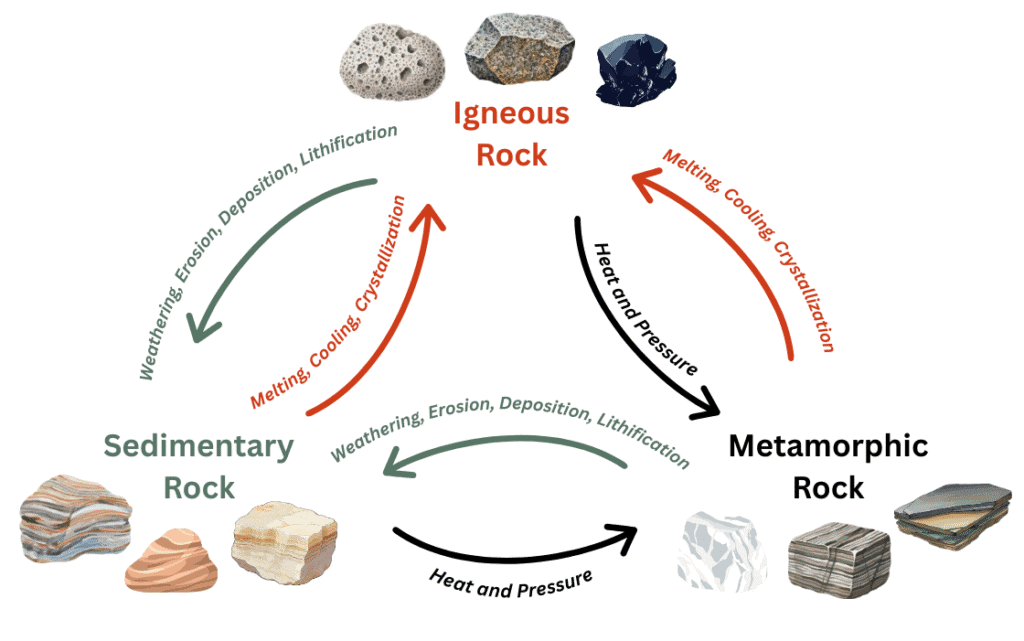
The classification of a rock is based on the processes that affect the rock’s chemical and physical properties. The rock cycle is the continuous process by which rocks are formed, altered, and transformed through geological mechanisms, resulting in the creation of three primary rock types: igneous, sedimentary, and metamorphic.
Let’s refresh your memory of rock forming processes and their corresponding rock type. Analyze the interactive slide below to evaluate the rock-forming processes and identify which type of rock is represented. You can click on the rock’s name to check your answer.
You can click on the arrow at the bottom-right of the image to expand the slide.
Match the Rock Types
Now that you have reviewed the types of rocks and how they form, test your knowledge of specific rocks and classify them on the interactive slide below.
The images with the rock names are draggable items. Drag each rock to its corresponding category. Once you have matched each rock to their appropriate category, check your work.
You can click on the arrow at the bottom-right of the image to expand the slide.
Understanding Rocks and Hydrocarbons
Locating potential hydrocarbon resources begins with analyzing subsurface rocks and how they formed. Knowing the different types of rocks and the processes that create them is key to finding oil and natural gas, which are called hydrocarbons. These hydrocarbons come from ancient plants and animals that lived in specific environments millions of years ago. Over time, the rock cycle helped bury and transform these remains, creating the conditions for hydrocarbons to form and become trapped in certain rock layers. Fossils are an important clue in this process because they reveal the ecosystems where these organisms lived. In the next section, you’ll learn more about fossils and how they form.