


Igneous rock can be thought of as the mother of all rocks. Earth was molten rock as it formed and over time, cooled to form igneous rock. Over millions of years, this igneous rock was put under heat and pressure to one day become metamorphic rock and likewise, was subject to surface processes of weathering, erosion, deposition, and lithification to become sedimentary rock.
Types of Igneous Rocks
Intrusive Igneous Rocks
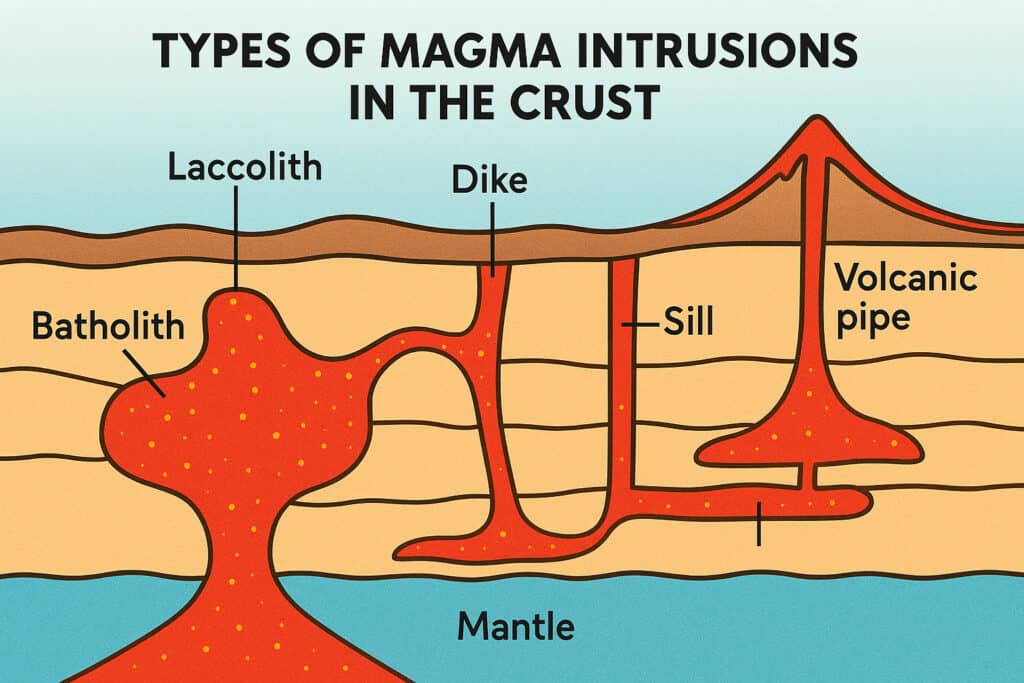
Igneous rock forms in two environments – in the subsurface (underground) or at Earth’s surface. When igneous rock forms in the subsurface, it is known as plutonic (intrusive) igneous rock (see Figure 1). Plutonic igneous rock forms when magma slowly cools over millions of years. This slow cooling process is the reason you see large mineral grains in plutonic igneous rock (think granite).
You can see evidence of an intrusive igneous rock formation in the Texas Hill Country.

Extrusive Igneous Rocks
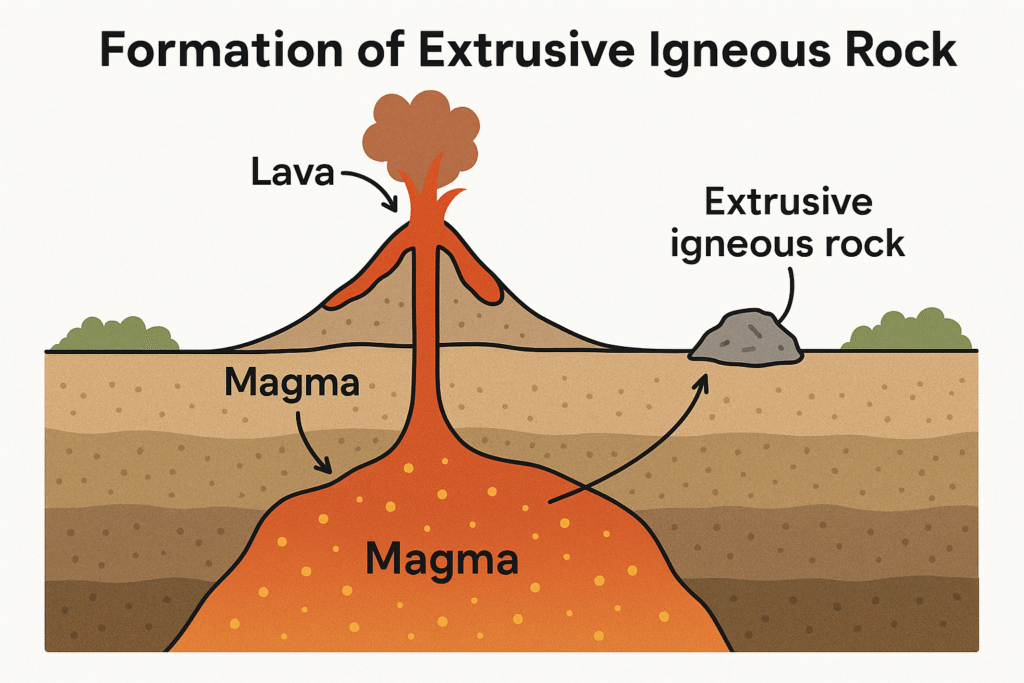
Igneous rock that forms at Earth’s surface is known as volcanic (extrusive) igneous rock (see Figure 2). Volcanic igneous rock forms as a result of volcanic activity. This can be volcanic eruptions, lava fields associated with fissure eruptions, or lava cooling at mid-ocean ridges. This type of igneous rock cools much more quickly and therefore the rock does not tend to have large visible mineral grains.
Here are some examples of extrusive igneous rock formations found in Europe and the U.S.

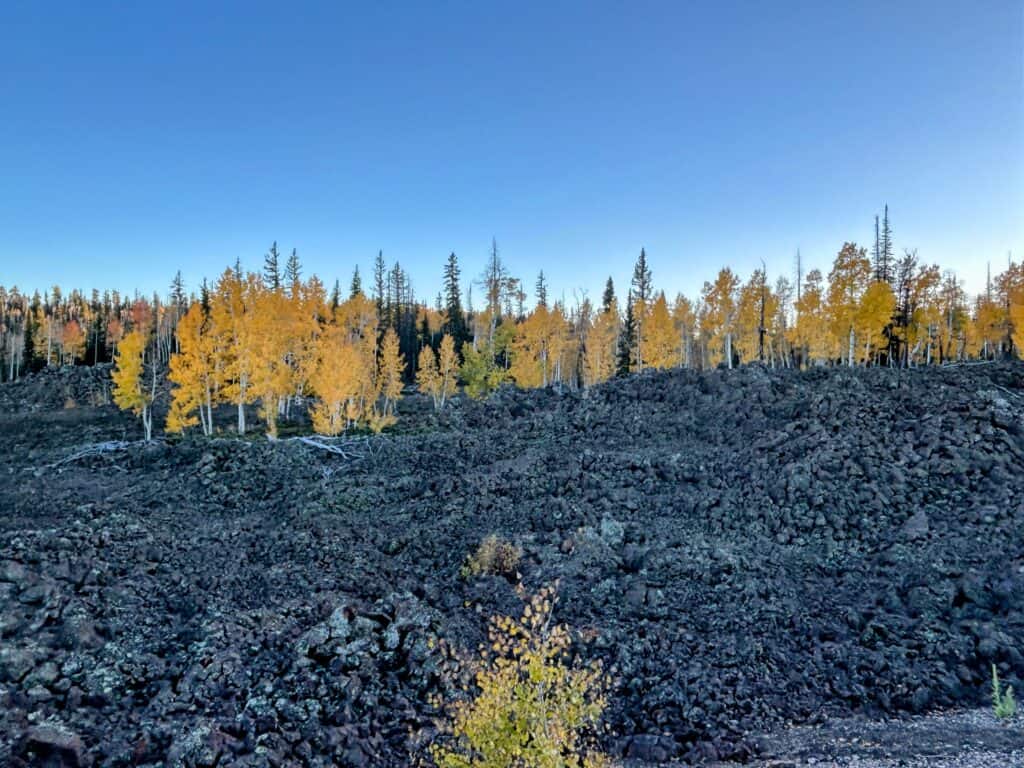
Image Credits
- Types-of-Magma-Intrusions (AI): AI
- enchanted-rock: Photo Credit: Sabrina Ewald
- Formation-of-Extrusive-Igneous-Rocks: AI
- Edinburgh-Castle (1): Photo Credit: Sabrina Ewald
- Lava-Flow (1): Photo Credit: Sabrina Ewald